Where tradition meets young hands
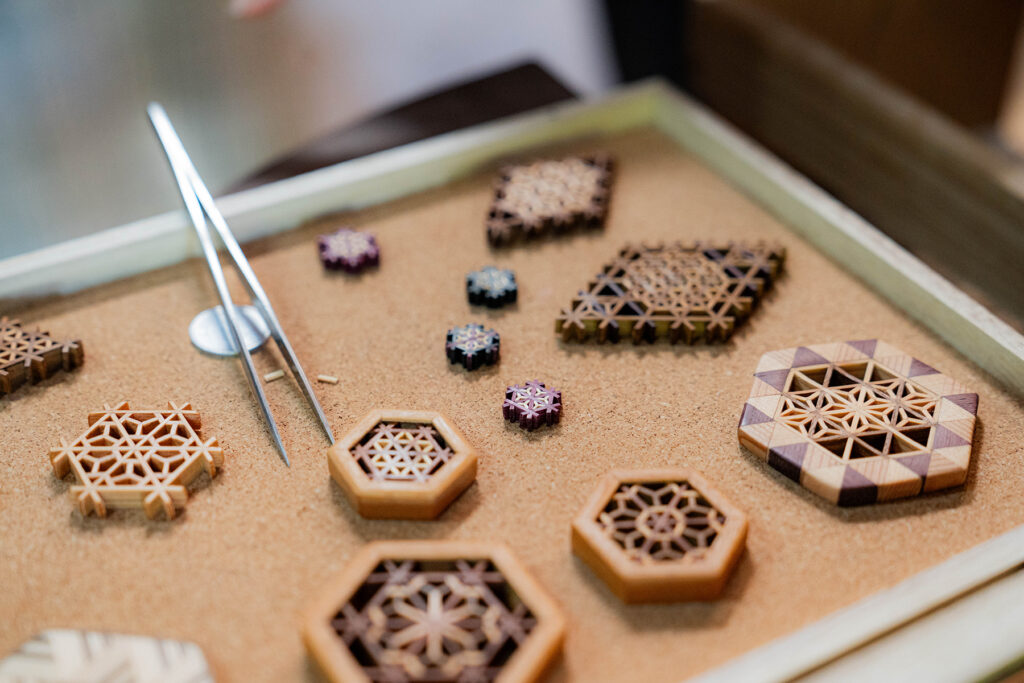
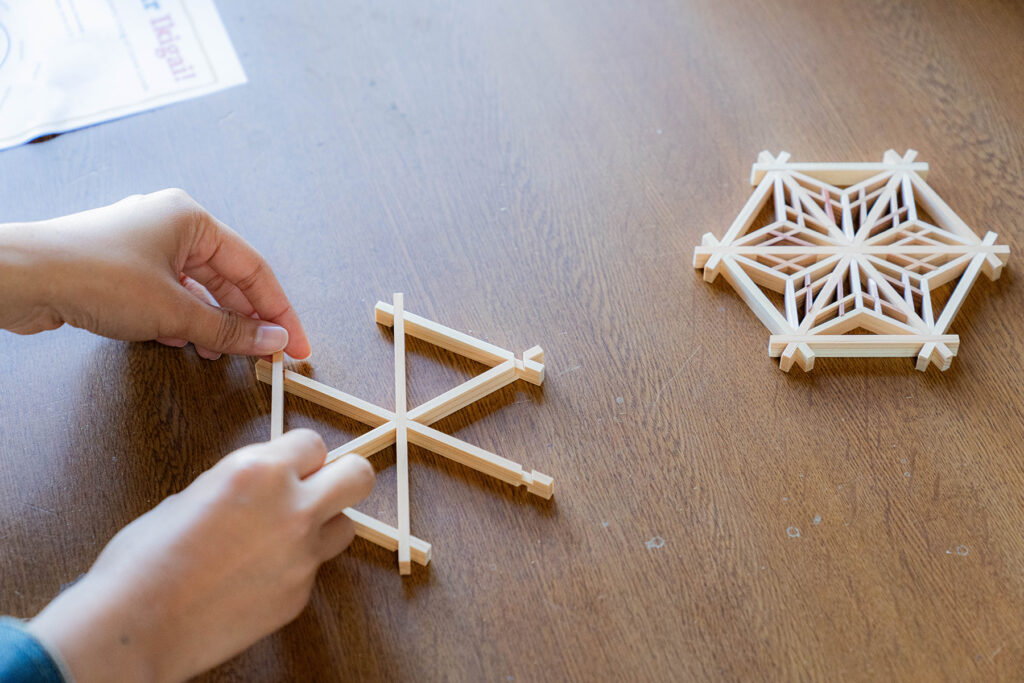
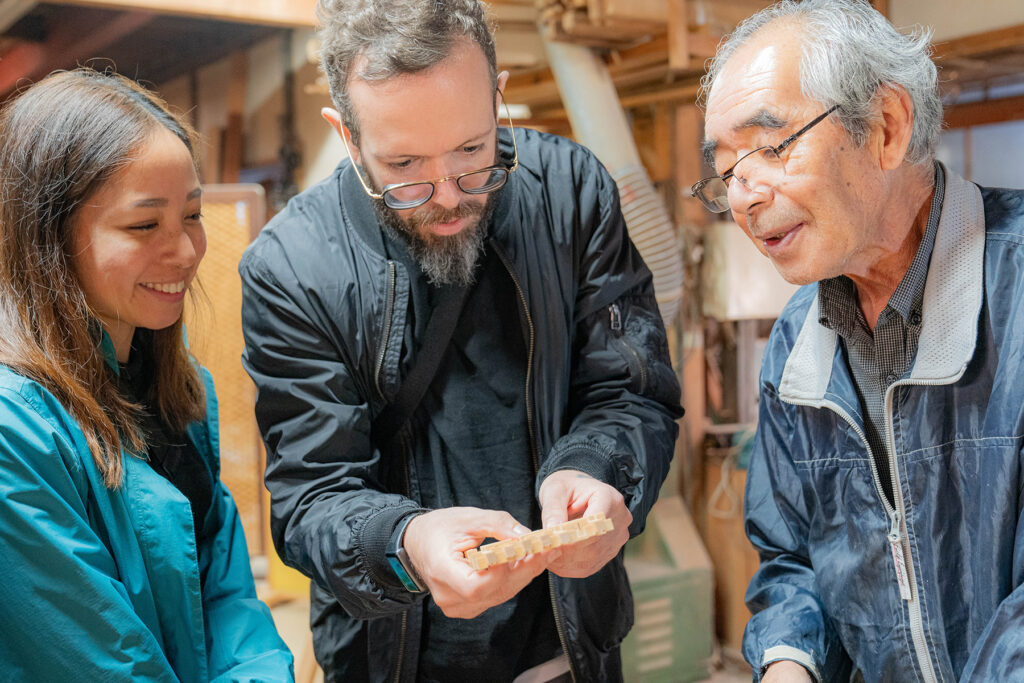
n Unnan, a rural area of eastern Shimane, master craftsman Kiyoshi Funaki and a group of young artisans keep kumiko alive. Kumiko is the Japanese woodwork in which hundreds of small wooden pieces are fitted into patterns without nails. At Funaki Woodworks, small groups of two to five can sit at the workbench with them for two hours, make a kumiko coaster by hand, and hear the story of the craft from a ThoughINAKA Storyteller.
Only Wood, Only Hands, Only Time
At first glance, kumiko looks almost impossible. Hundreds of tiny wooden pieces, held together with no nails, no screws, no glue. Only wood. Only hands. Only time.
In the Unnan area, kumiko is not something preserved behind glass. It is a living craft, shaped by tradition and carried forward by new hands.
What Is Kumiko?
Kumiko is a traditional Japanese joinery technique. Thin strips of wood are cut, notched and fitted together by hand into geometric patterns, and the pieces hold each other in place without metal fasteners. You may have seen it in the screens, shoji and ranma (transoms) of older Japanese homes and temples. The technique has been passed down since the Asuka period, more than a thousand years ago.
What makes it difficult is the fit. Each piece must meet the next so closely that the whole pattern supports itself. In Unnan, the craftsmen use local timber, and each wood brings its own colour and scent to the finished work.
Generations at One Workbench
At Funaki Woodworks, master craftsman Funaki-san works side by side with young artisans. Here, experience is not guarded. It is shared.
You see generations learning together: young craftspeople training their eyes and hands, guided by quiet precision and patience. This is how craft survives in rural Japan.
Precision That Lets the Wood Hold Itself
Every piece is cut with astonishing accuracy, sometimes within 0.1 millimetres. Not to impress, but to let the wood support itself, naturally.
Local timber is used. Nothing is wasted. Even the smallest shavings are given purpose.
At the Workbench, Time Slows
When you sit at the workbench, time slows. There is no rush to finish. Mistakes are part of learning.
With a local Storyteller beside you, the meaning deepens. Why Japanese craftsmanship values patience over speed. Why repetition builds trust. Why teaching the next generation matters as much as the craft itself.
Guests often say, “I forgot about time.” “I felt calm.” “I understood something about Japan.”
You take home a small piece of kumiko. But what stays longer is the rhythm of careful making.
You can book the kumiko workshop at Funaki Woodworks as a morning on its own, or combine it with nearby experiences such as soba making in Okuizumo or sake tasting in Okuizumo. To see how these fit into a longer journey, explore our Shimane tours (link to the pillar page once it is live).
Travel advisors and agencies can find partner information on our For Travel Agencies page.
Why Unnan
This is one way we share Japan as it is lived. Quiet. Human. Intergenerational.
Unnan is a small place. We do not seek crowds. We welcome those who value time, people, and continuity.
If this feels like your kind of journey, send us a message. We are happy to begin the conversation early.
Ask about dates for the kumiko workshop in Unnan