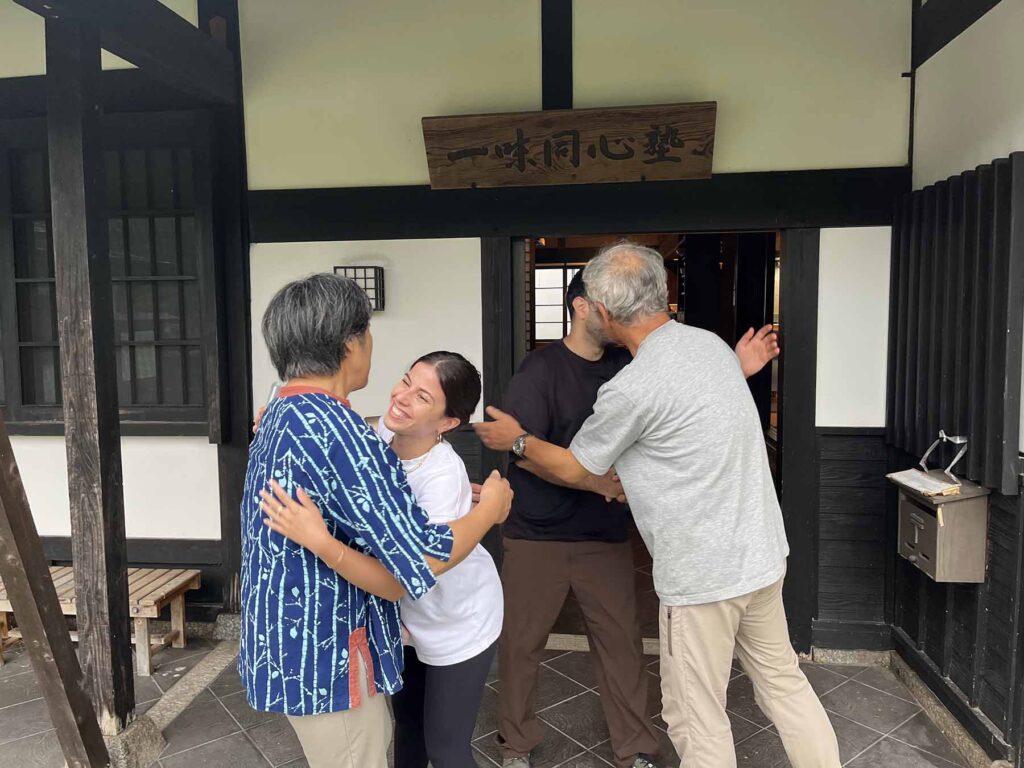
A Reason to Make It Here, With These People
In Okuizumo, a small town in the mountains of eastern Shimane, you can make Izumo soba by hand with a local family, then sit down together and eat what you made. Izumo soba is the buckwheat noodle of this region. It is darker and more fragrant than most soba in Japan, because the whole kernel is ground on a stone mill. The experience takes about two hours, runs all year, and is shared by a small group of two to five people, with a ThoughINAKA Storyteller interpreting in English.
You Can Make Soba Anywhere in Japan. Why Here?
You can make soba almost anywhere in Japan. So why come all the way to Okuizumo to do it?
The answer is not in the recipe. It is in the people.
In Okuizumo, soba making is not treated as an attraction or a performance. It is part of everyday life, shaped by land, seasons, and long relationships. When you step into the kitchen here, you are not another guest passing through. You are welcomed as someone who chose to come, and that choice matters.
At the Workbench
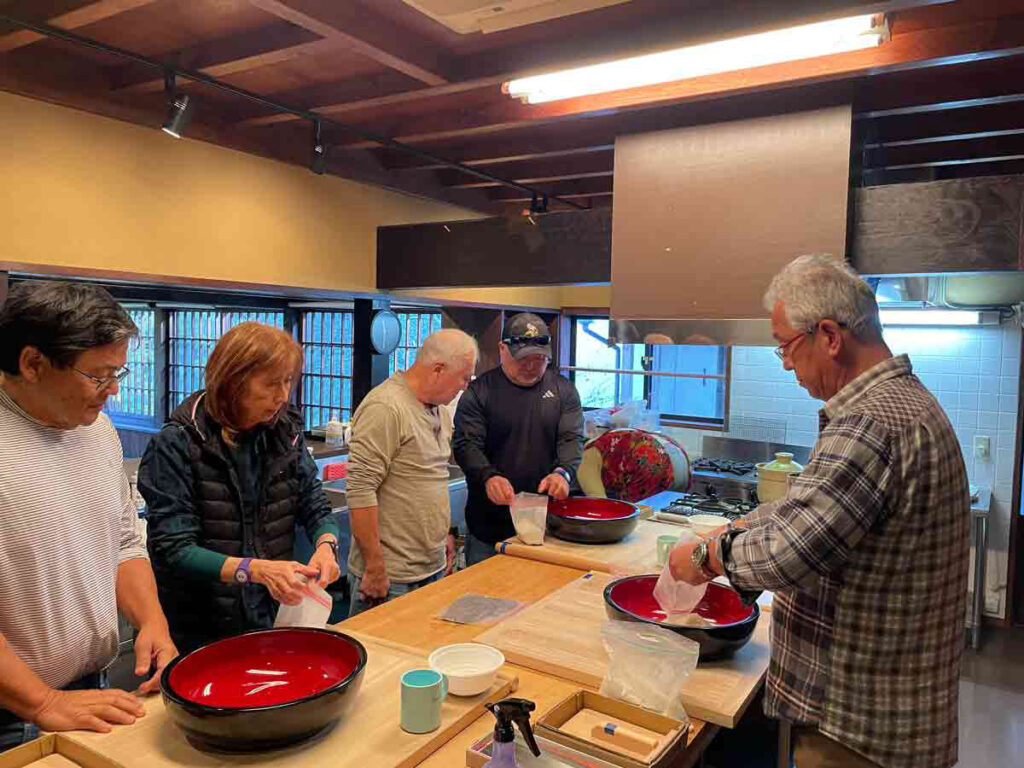
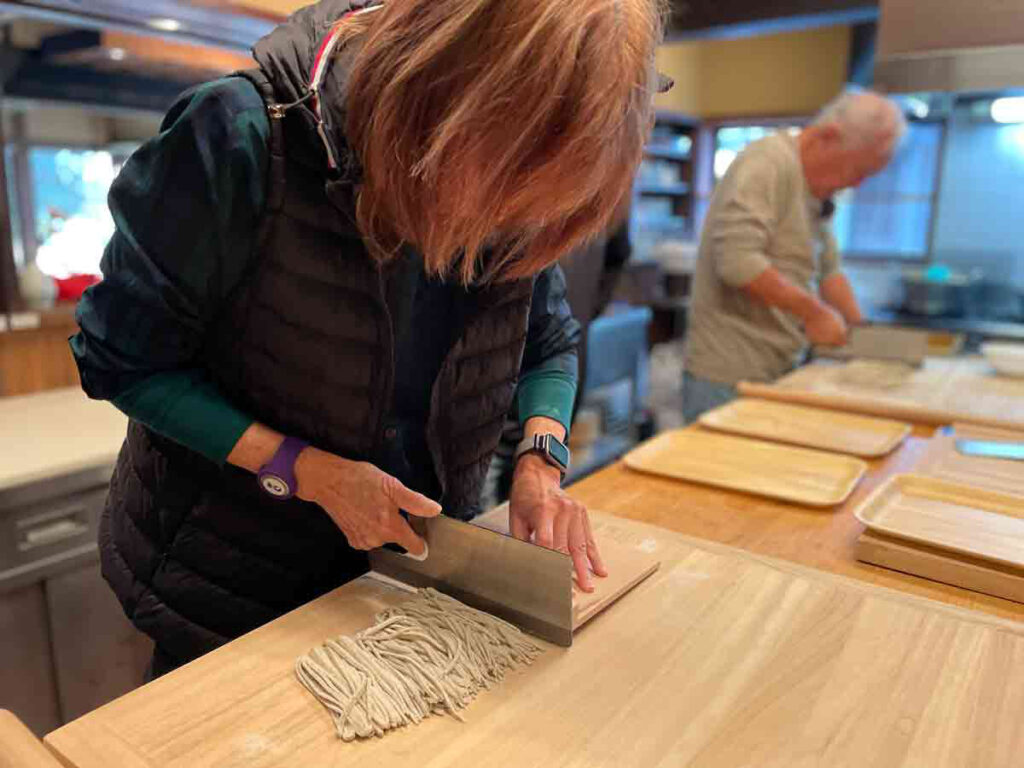
The experience begins quietly. You stand at the wooden workbench, hands dusted with flour. Kneading, rolling, cutting.
These are simple actions, and they quickly teach you balance. Too much force, and the dough breaks. Too little, and it falls apart. Your hands begin to learn before your mind does.
Passed From Hands to Hands
The local family stays close. They do not rush you. They do not correct every movement. They watch carefully, stepping in only when needed.
This is how soba has been passed down in Okuizumo: from hands to hands, from one generation to the next. Not through instruction manuals, but through shared time.
What Makes Izumo Soba Different
A local Storyteller is there to gently connect what you are doing to where you are. These explanations are not lectures. They come naturally, between movements and conversations.
You may learn why soba here is darker than in other regions. In Izumo soba, the whole buckwheat kernel is ground on a stone mill, so the flour keeps more of the grain’s colour, aroma, and depth of flavour. The soil, water, and cool climate of this mountain area suit buckwheat well, and people here have grown it for a long time.
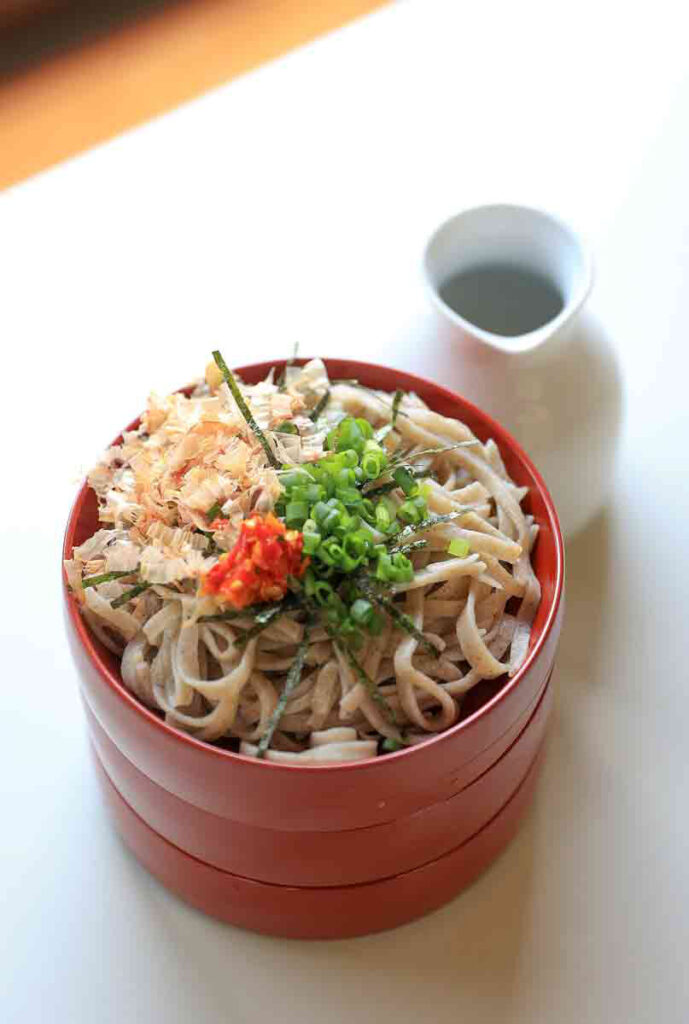
You may hear about the ways soba is eaten in this region. Warigo soba is served in small stacked round bowls, and the dipping broth is poured from one tier down to the next as you eat. Kama-age soba comes to the table in the hot water it was boiled in, and you season it yourself.
And you may learn why the shapes are never perfectly uniform, and why “good enough” is often better than beautiful. Handmade noodles cut by a first-timer will vary in width, and that is fine. Here, they are judged by how they taste and who made them, not by how even they look.
A Song Nobody Announced
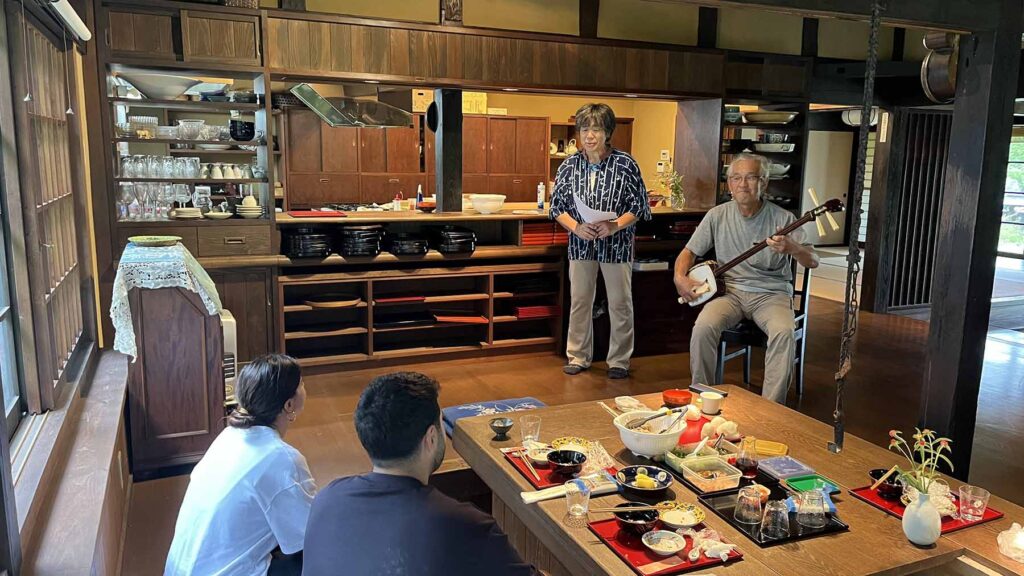
Sometimes, something unexpected happens. A song begins. Folk music, played not for an audience, but because it feels right in the moment. No announcement. No performance.
This is also omotenashi in Okuizumo. Not scripted hospitality, not service designed to impress, but a quiet decision to share something meaningful, simply because you are here.
Sitting Down Together
When the soba is finished, everyone sits together. What you just made is placed on the table. Warm. Simple. Enough.
Many guests say similar things afterward. “I thought I came to make soba. But I learned something else.” They are not talking about technique. They are talking about people, about trust, about being welcomed into a rhythm that already existed long before they arrived.
You can book the soba making experience in Okuizumo on its own, or combine it with other days in the area, such as tofu making in Okuizumo, a visit to a traditional soy sauce brewery, or sake tasting in Okuizumo. To see how these fit together, explore our Shimane tours (link to the pillar page once it is live).
Travel advisors and agencies can find our partner information on the For Travel Agencies page.
Why Come All the Way Here
Okuizumo is a small place. It does not aim to attract crowds or offer quick experiences. What it offers instead is time spent with people who care deeply for their land and choose to share it carefully.
This is why you come all the way here. Not for soba alone, but for the people who make it, teach it, and live it.
If this way of traveling speaks to you, and you are thinking about a visit to rural Japan next season, we would be happy to hear from you. We believe journeys like this are best started with a conversation.
Ask about dates for soba making in Okuizumo